

The pressure of getting one of Western New York’s largest construction projects done on time by this summer not only weighs heavily on the Buffalo Bills, but also the workers putting in the on-site labor.
The project to build a stadium costing more than $2 billion for the Bills has meant physical demands, long hours, and irregular work schedules for many of the construction workers on the approximately three-year job.
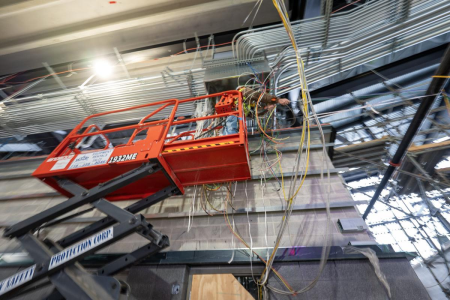
Construction workers run wiring at the new Highmark Stadium earlier this month. Work has been going on nearly around the clock,
with three shifts, seven days a week, during most weeks, as part of the push to complete the stadium in time. Harry Scull Jr., Buffalo News
While some workers feel pride just to be part of building something so monumental for the Buffalo area and the sports-loving community, it has also come with a lot of pressure, according to Tim Benes, business manager at sheet metal labor union SMART Local 71.
There are so many moving parts and looming deadlines coming together all at once to get the stadium substantially done by June and ready for football during the 2025 NFL season.
That has made it even more vital to make on-demand, preventive mental health counseling available to the approximately 8,000 workers who have been on the site at one time or another.
“They’re starting to get a little tired,” Benes said about stadium construction workers during a recent Facebook Live discussion hosted by the Erie County Anti-Stigma Coalition.
“We’ve been working long days, and it’s been a grind, but we’re getting toward the end, so we feel good about it,” he added.
Bills officials have lauded construction workers for their work on the stadium since the groundbreaking in June 2023. Worker morale has typically been described as being in a good place throughout the project.
But work has needed to be particularly revved up on site over the past year or so after some areas of the project fell slightly behind schedule. Work has been going on nearly around the clock, with three shifts, seven days a week, during most weeks, as part of the push to complete the stadium in time to host its first events this summer.
Then, last month, vulgar and homophobic graffiti was found inside the new stadium in suites and locker room areas that caused $150,000 in damage. General contractor Gilbane Turner shut down the project site for four days.
At least two workers who may be responsible for the graffiti have been identified and removed from the project, but no charges have been filed. The investigation by the Erie County Sheriff’s Office remains ongoing.
It has been a black eye for a project that otherwise has brought mostly positive attention to the area trades.
Benes said how workers feel about what they’re doing on the site really depends on the person and crew and what portions of the stadium they’re working on, but mostly, there is a sense of pride on the job site. Still, for some, this is just another job, he added.
“They know Western New Yorkers are going to drive by that for the rest of their lives, and they look at that little piece that they helped put up, and that’s great for every one of them,” Benes said.
While there are plenty of local workers on the job, some come from all over, and that can be stressful, not to be home for a significant period of time, according to Monica Farrar, a mental health counselor at Ramp Health who is working on the Bills stadium site.
“You’re not seeing family, your kids, and, yeah, it can cause stress, marital problems, and family issues,” Farrar said. “People are by themselves and can isolate and use (drugs and alcohol) more, especially if they’re alone and in isolation, like if they are staying in a hotel room.”
It is why the Bills and Gilbane Turner partnered with union leadership to create a program that would provide workers with resources to help with mental health. That includes having a mental health counselor on the job four days a week and training for union leadership and stewards so they could also have the skills and knowledge to recognize workers who are having problems and find them the right resources.
Marc Gnesin, senior vice president at NFP Construction & Infrastructure, said the Bills agreed and have put a financial stake into supporting the program.
“We wanted to create an atmosphere where mental health was taken seriously,” Gnesin said. “It’s really about seeing that this works and seeing that it creates a better environment, and it is incumbent upon all the stakeholders to let it branch and grow from where we are today.”
Employees in construction often experience stigma when they seek help because they work in a male-dominated industry that promotes toughness and strength, so asking for help is perceived as a weakness.
According to the CDC, the construction industry has the second-highest rate of suicide among its workers – that is, roughly four times the national average. There is also a high rate of substance abuse among construction workers.
Farrar began working as a mental health counselor on the construction site once a week, but the need and acceptance of her services became evident quickly. About 18% of workers on the site have come to Farrar for multiple visits.
“It’s such a great benefit because the employers are letting them see me during the course of the day,” Farrar said. “These people are working long days. They couldn’t even go off-site to see somebody if they wanted to, because the business is closed and they don’t have access. It’s perfect for them if they want the opportunity to see me.”
There also needed to be buy-in from the union, and Benes said that, right away, leadership saw the value, especially if it makes for a happier work environment, which is usually a more productive one.
“I hear nothing but good things from our members,” Benes said. “We’re extremely happy this is coming to the light. It’s a problem. Construction is dangerous, but we lose more people to suicide than anything else.”
They agree that this should be the norm on all job sites, but that will take a major commitment on many levels and probably can’t be done on every job. While it may be more of an expense, investing additional resources into mental health can have other benefits, such as lowering insurance costs.
“It is a culture of, no matter what, you tie your boots and go to work,” Benes said. “You’ve got to feed your family and get the job done. We don’t have time for feelings. But we have to do the best we can to break that.”
The project to build a stadium costing more than $2 billion for the Bills has meant physical demands, long hours, and irregular work schedules for many of the construction workers on the approximately three-year job.
Construction workers run wiring at the new Highmark Stadium earlier this month. Work has been going on nearly around the clock,
with three shifts, seven days a week, during most weeks, as part of the push to complete the stadium in time. Harry Scull Jr., Buffalo News
While some workers feel pride just to be part of building something so monumental for the Buffalo area and the sports-loving community, it has also come with a lot of pressure, according to Tim Benes, business manager at sheet metal labor union SMART Local 71.
There are so many moving parts and looming deadlines coming together all at once to get the stadium substantially done by June and ready for football during the 2025 NFL season.
That has made it even more vital to make on-demand, preventive mental health counseling available to the approximately 8,000 workers who have been on the site at one time or another.
“They’re starting to get a little tired,” Benes said about stadium construction workers during a recent Facebook Live discussion hosted by the Erie County Anti-Stigma Coalition.
“We’ve been working long days, and it’s been a grind, but we’re getting toward the end, so we feel good about it,” he added.
Bills officials have lauded construction workers for their work on the stadium since the groundbreaking in June 2023. Worker morale has typically been described as being in a good place throughout the project.
But work has needed to be particularly revved up on site over the past year or so after some areas of the project fell slightly behind schedule. Work has been going on nearly around the clock, with three shifts, seven days a week, during most weeks, as part of the push to complete the stadium in time to host its first events this summer.
Then, last month, vulgar and homophobic graffiti was found inside the new stadium in suites and locker room areas that caused $150,000 in damage. General contractor Gilbane Turner shut down the project site for four days.
At least two workers who may be responsible for the graffiti have been identified and removed from the project, but no charges have been filed. The investigation by the Erie County Sheriff’s Office remains ongoing.
It has been a black eye for a project that otherwise has brought mostly positive attention to the area trades.
Benes said how workers feel about what they’re doing on the site really depends on the person and crew and what portions of the stadium they’re working on, but mostly, there is a sense of pride on the job site. Still, for some, this is just another job, he added.
“They know Western New Yorkers are going to drive by that for the rest of their lives, and they look at that little piece that they helped put up, and that’s great for every one of them,” Benes said.
While there are plenty of local workers on the job, some come from all over, and that can be stressful, not to be home for a significant period of time, according to Monica Farrar, a mental health counselor at Ramp Health who is working on the Bills stadium site.
“You’re not seeing family, your kids, and, yeah, it can cause stress, marital problems, and family issues,” Farrar said. “People are by themselves and can isolate and use (drugs and alcohol) more, especially if they’re alone and in isolation, like if they are staying in a hotel room.”
It is why the Bills and Gilbane Turner partnered with union leadership to create a program that would provide workers with resources to help with mental health. That includes having a mental health counselor on the job four days a week and training for union leadership and stewards so they could also have the skills and knowledge to recognize workers who are having problems and find them the right resources.
Marc Gnesin, senior vice president at NFP Construction & Infrastructure, said the Bills agreed and have put a financial stake into supporting the program.
“We wanted to create an atmosphere where mental health was taken seriously,” Gnesin said. “It’s really about seeing that this works and seeing that it creates a better environment, and it is incumbent upon all the stakeholders to let it branch and grow from where we are today.”
Employees in construction often experience stigma when they seek help because they work in a male-dominated industry that promotes toughness and strength, so asking for help is perceived as a weakness.
According to the CDC, the construction industry has the second-highest rate of suicide among its workers – that is, roughly four times the national average. There is also a high rate of substance abuse among construction workers.
Farrar began working as a mental health counselor on the construction site once a week, but the need and acceptance of her services became evident quickly. About 18% of workers on the site have come to Farrar for multiple visits.
“It’s such a great benefit because the employers are letting them see me during the course of the day,” Farrar said. “These people are working long days. They couldn’t even go off-site to see somebody if they wanted to, because the business is closed and they don’t have access. It’s perfect for them if they want the opportunity to see me.”
There also needed to be buy-in from the union, and Benes said that, right away, leadership saw the value, especially if it makes for a happier work environment, which is usually a more productive one.
“I hear nothing but good things from our members,” Benes said. “We’re extremely happy this is coming to the light. It’s a problem. Construction is dangerous, but we lose more people to suicide than anything else.”
They agree that this should be the norm on all job sites, but that will take a major commitment on many levels and probably can’t be done on every job. While it may be more of an expense, investing additional resources into mental health can have other benefits, such as lowering insurance costs.
“It is a culture of, no matter what, you tie your boots and go to work,” Benes said. “You’ve got to feed your family and get the job done. We don’t have time for feelings. But we have to do the best we can to break that.”