

What does it take to end a record playoff drought? How Sabres can follow NHL’s Panthers, NFL’s Bills
This current group of Sabres players is trying to stop Buffalo's playoff drought from reaching 15 seasons.
 www.nytimes.com
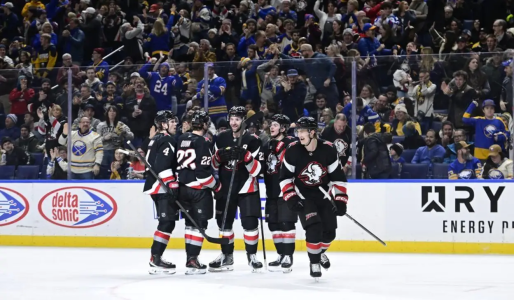
This current group of Sabres players is trying to stop Buffalo's playoff drought from reaching 15 seasons. Jaiden Tripi / NHLI via Getty Images
When Jarmo Kekäläinen addressed the players after taking over as the Buffalo Sabres’ general manager last month, he quickly brought up the playoff drought. The 14-year drought is the longest in NHL history. As it’s grown in length, it has swallowed up three general managers and six coaches. It’s added a sometimes unbearable pressure to dozens of players and often sucked the life out of one of the NHL’s most passionate markets.
Kekäläinen knew he couldn’t ignore it, but he wanted to make his stance clear to the players right away.
“I told the players to forget about the 14 years thing that’s kind of hanging around like a cloud, black cloud, around the team, and I’m going to do the same thing,” Kekäläinen said.
That’s a sentiment others have uttered, but it’s more difficult to put into action. The Sabres ripping off 10 straight wins is a sign that perhaps they are starting to put an intense focus on the day at hand and not the 14 years that came before or what the future might hold.
But theirs is a different psychological challenge than most have to face in professional sports. Stephen Weiss knows what these Sabres players are feeling. He’s one of the few who can put himself in the skates of the players who are trying to shed the burden of such a drought. Weiss was a member of the Florida Panthers for 10 years of their 12-year playoff drought that extended from 2000 to 2012. The Sabres broke that record when they came up short of the playoffs for a 13th straight season in 2022-23, missing by a single point.
Weiss understands the range of emotions these players have gone through. You start as a young player just trying to establish yourself in the league. If you’re on a rebuilding team, you’re surrounded by other young players doing the same. But you eventually get to the point where the core group is established, expectations rise, and it’s time to take a step.
“When you can’t get there, it starts to build on you,” Weiss said. “Your summers are long. You’re watching the other teams in the playoffs, and you almost start to feel like you’re in a different league. That starts to wear on you for sure.”
That’s where the Sabres have found themselves every April when the postseason rolls around. This current group of players is trying to stop the playoff drought from reaching 15 seasons. That would tie the New York Jets, who just finished another season outside the NFL playoffs, for the longest drought in pro sports.
Weiss remembers the year before the drought ended feeling like “rock bottom” for the organization. Core players like Nathan Horton and Jay Bouwmeester got traded by first-year general manager Dale Tallon heading into the 2010-11 season. That offseason, Tallon went about remaking the roster. It took time to sink in, but adding players like John Madden, Brian Campbell, Ed Jovanovski and Kris Versteeg over a two-year stretch changed the locker room.
“Champions breed champions,” Tallon said. “It’s a fact. And losers breed losers. That’s just the way life is. You have to be careful with who you bring in. For me, I had to get some guys that had championship breeding, and it spread. It comes from within. They knew how to win, and they knew how to get through the tough times.”
Weiss felt the difference immediately in training camp. The value of adding experienced winners isn’t always easy to measure, but it shows up daily in the intensity of practices and the habits that translate to the games.
“They weren’t carrying that weight,” Weiss said. “I still was, but we didn’t have that baggage lying around. It was the reason why we got in. There’s no doubt about it.
“There was maybe one conversation from Jovo or Brian Campbell to the effect of, ‘What has happened in the past is out the window. We’re going to get this done here.’ That was it. We never talked about it again. Everybody bought into the system. We played hard, we defended hard. If there’s one thing I can say about that team, it’s that we competed hard defensively.”
Tallon had the advantage of the Florida climate to attract players from outside, but back then, the weather was a double-edged sword. Tallon felt a lot of guys used Florida as an early retirement.
“Three years left, I’ll just mail it in,” Tallon said.
The only thing that changed that was winning. Tallon was able to tap into his time in Chicago to add some of those proven winners. Only then did the culture truly change.
Culture is a buzzword in pro sports, but it’s also impossible to ignore when trying to end a prolonged period of losing. Changing the culture has been an ever-present challenge for all of the coaches, general managers and players that have been with the Sabres’ organization over the last decade and a half. In the last few years, the Sabres have added players who have experienced winning like Bowen Byram, Jason Zucker, Ryan McLeod and Alex Lyon.

Shaq Lawson and the Bills ended their 17-year playoff drought in 2017.Justin Berl / Getty Images
Before the Bills ended their 17-year playoff drought, they brought in a lot of fresh faces throughout the organization who had experienced some level of playoff success. Players like Micah Hyde, Patrick DiMarco and Stephen Hauschka had been in the playoffs. They struck gold with Jordan Poyer, a player who was hungry for a change of scenery and more opportunity. Head coach Sean McDermott and general manager Brandon Beane had been part of a team that won the NFC in Carolina. They embraced the challenge of the drought head-on and spoke about what the town would be like when they were able to get over the hump as if it were inevitable.
Players felt that. Shaq Lawson had been with the Bills the year prior during the dysfunctional final season of Rex Ryan. Lawson, who is back with the Bills, also had a stint with the Jets in the midst of their playoff drought. Playing for the Jets was the first time he ever saw home fans with paper bags over their heads. The booing during home games impacted the team’s energy.
“You need that winning mindset, even from the cafeteria people, the cleaning people,” Lawson said. “All of them play a role. You go to some teams that don’t have that, you can feel the energy throughout the building. It’s just trying to get through the day type of s—.”
The Bills ended that 17-year playoff drought in 2017. They needed some help to do it. After the Bills won in Miami in the final week of the season, they watched in the locker room as the Bengals got a last-second touchdown to beat the Ravens. The Bills had snuck into the playoffs as a wild card, and the scene in the locker room was equal parts chaotic and jubilant.
Poyer, who is also back with the Bills after a year playing in Miami, remembers the wild night of partying he had among the locals in downtown Buffalo. But the moment that sticks with him is when the team plane landed back in Buffalo with a huge crowd of Bills fans waiting for them on a cold January night.
“Coming off the plane helped me realize what this meant,” Poyer said. “Football’s everything to this town. We wanted to be a team that made this city proud.”
Added Lawson: “We were watching that Bengals and Ravens game. At that point, I feel like I won the Super Bowl personally. I was just relieved that 17-year drought was over. That was special. When we got back to the airport, it felt like a parade getting over that drought. Imagine what this city will be like when we win a Super Bowl.”
Sabres owner Terry Pegula, who also owns the Bills, hasn’t yet been able to recreate that type of scene for the hockey team. He’s tried and failed repeatedly when it comes to getting the right leaders in place. The hope is that Kekäläinen, along with coach Lindy Ruff, can be the combination that helps put the organization back in the playoffs. The early signs have been encouraging.
Tallon can appreciate the approach Kekäläinen has taken in his first weeks on the job. Kekäläinen is steadfast that he won’t take shortcuts to get into the playoffs when winning the Stanley Cup is the ultimate goal.
“You have to set your standards a little higher and expectations a little higher than just making the playoffs,” Tallon said.
Lyon was thinking about that on the Sabres’ West Coast road trip, a few days before the winning streak started. He went to the Stanley Cup Final in 2023 as a member of the Panthers. And he also recently played for the Red Wings, who are dealing with the pressure of trying to end their own playoff drought. The challenge is part of what drew him to the Sabres.
“I think one thing we can do better is just say, ‘Screw it,’” Lyon said. “Yes, this is our reality. The team hasn’t made the playoffs in 14 years. What do we have to lose? We have absolutely nothing to lose. There’s no reason to not go out and just lay it on the line every night. It’s not going to be perfect. There’s going to be some bad nights and some good nights, but let’s just lay it on the line every night. It’s pressurized when you get into the conference final. The reward for making the playoffs is way more pressurized games, right? Way more difficult hockey. I think we need to understand that as well. It just gets harder and harder the further you go.”
The Sabres are going to enter the second half of the season with a real chance to end the drought. And while Kekäläinen isn’t keen on taking shortcuts just to end the drought, there is long-term value in doing what the Bills did in 2017. Since then, the team has made the playoffs in seven of the eight seasons that followed. The perception of the organization has changed.
“It was huge for us to set that standard and give this organization that belief that we could and we are a good football team,” Poyer said. “Walking that way, talking that way.”