

Ryan executive order would bar city employees from participating in civil immigration enforcement
Buffalo Mayor Sean Ryan plans to submit an executive order next week that would bar city employees from participating in civil immigration enforcement.
With President Trump's immigration enforcement crackdown in Minnesota dominating national headlines, Mayor Sean Ryan is set to submit an executive order next week that would bar city employees from participating in civil immigration enforcement.
Ryan on Friday announced that he planned to issue the executive order soon, telling people gathered for the Partnership for Public Good’s annual community agenda event that immigrants and refugees have helped Buffalo grow and become a more economically and culturally vibrant city.
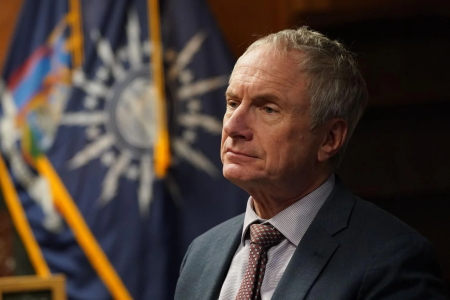
Buffalo Mayor Sean Ryan is set to issue an executive order next week that would bar city employees from participating in civil immigration enforcement.
Derek Gee, Buffalo News
Highlighting Trump’s efforts to shut down the federal refugee resettlement program and his recent escalation of immigration enforcement, Ryan said he heard from multiple people on the campaign trail who fear they would likely be targeted because of their accents or the color of their skin despite being citizens or having legal immigration status.
“What we don’t want is any chilling effect,” Ryan said. “We don’t want people not coming to City Hall to avail themselves of services because they’re afraid that somehow their visit to City Hall is going to yield a phone call to immigration officials.”
Ryan said the executive order would apply to all city employees, from building inspectors to police.
A Ryan spokesperson confirmed to The News that the administration plans to release the executive order next week but said the mayor would not make any further comments about it until then.
Questions emailed to the Department of Homeland Security press office were not answered Wednesday.
The federal Department of Homeland Security, which includes the Immigration and Customs Enforcement and Customs and Border Protection divisions, has spent the first year of Trump’s second term recruiting ICE agents to enforce immigration law and arrest people who are not in the country legally. Agents have been deployed to target cities in states with Democratic political leadership, including Los Angeles, Portland, Ore., and, most recently, the Twin Cities metro region in Minnesota.
Many people in those cities and others across the nation have protested, and groups have been confronting ICE agents and alerting neighbors when they are in the area. Earlier this month, Renee Good, a 37-year-old mother, was shot and killed by ICE agent Jonathan Ross while driving her car near federal immigration officers as they approached her, drawing widespread condemnation from public figures in the Twin Cities and beyond.
Department of Homeland Security and White House officials, including Secretary Kristi Noem, have repeatedly described the killing as justified, saying that Ross feared for his life as Good drove her car toward him.
ICE agents have also been approaching people on the street, including off-duty police officers, asking them of their immigration status and demanding to see paperwork proving their citizenship.
In Western New York, ICE agents have taken people into custody, despite having legal status to be in the United States, according to lawyers, advocates and family members.
Council Majority Leader Leah Halton-Pope said she would have to wait to see the order in full before coming to a final conclusion but generally supports the comments Ryan made last week.
“I've been very supportive of protecting those who live here and making sure that we do things the right way,” she said.
University District Council Member Rasheed Wyatt praised Ryan’s decision, saying that because of what is happening in Minneapolis and elsewhere, city leaders need to do what they can to put protections in place for people who may be unduly targeted.
“From what I'm understanding, the goal was to get those individuals who had committed serious crimes,” Wyatt said. “We're not getting those individuals. We're getting people who are just going about their day-to-day lives, and they're being caught up in a system that sometimes leaves their families questioning what's going on.”
Fillmore District Council Member Mitchell Nowakowski, who endorsed Ryan in last year’s election, said he also supports Ryan's decision as a way to protect people from having their civil rights and due process rights violated, as is happening in cities across the country.
“If someone has committed a crime, local authorities already know who they are and how to address it,” Nowakowski said in a text message. “We do not need federal agents kidnapping people off the street and labeling them ‘criminals’ on a whim. Buffalo is at its best when people feel safe to live, work, and contribute, and right now that sense of safety is being undermined.”
